
The short answer
- Buried utilities affect the work plan, so a locate belongs in the preparation for grinding below ground.
- Stump width, wood condition and the number of stumps determine how much material needs grinding.
- Gate clearance, grinding depth and hauling away the chips change the equipment access and cleanup involved.
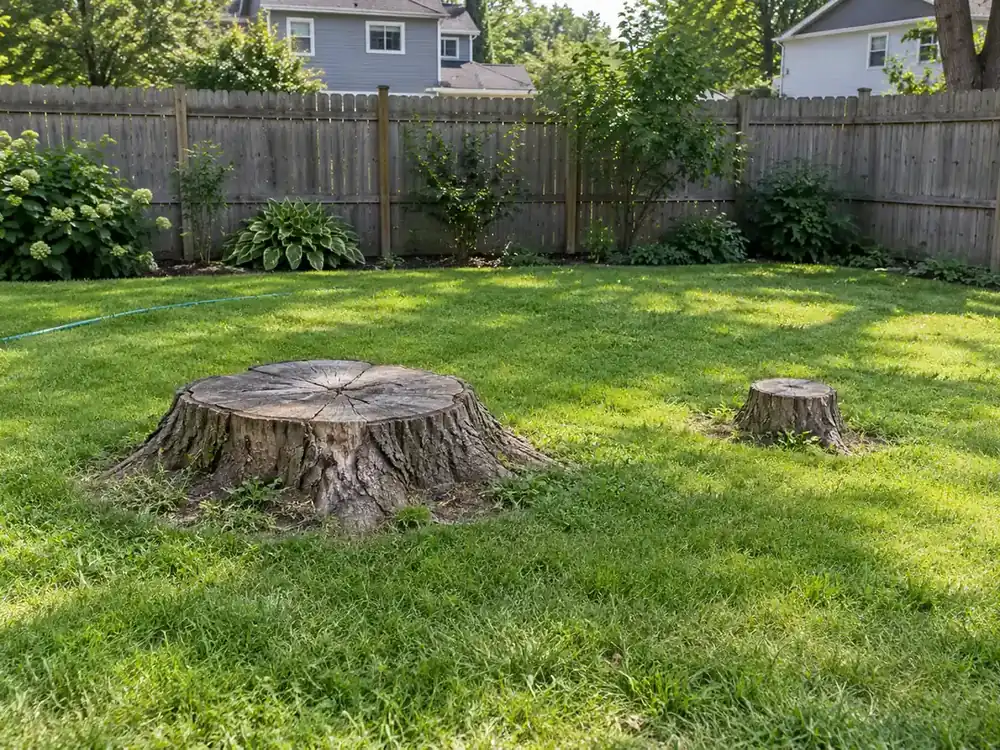
Width, Roots and Access Shape the Job
Stump grinding prices depend on the wood being removed, the route into the yard and the finish you want afterward. A wide stump in open grass presents a different job from a smaller one wedged between a fence and patio. Call about either spot now. You can describe the setting without measuring the stump or moving anything.
Buried Lines Beneath the Stump
Underground utilities must be accounted for before the grinder works below the soil. JULIE offers free notification for member utilities to mark buried lines; requests can be made online or by calling 811. Your tree pro can discuss the locate as part of planning the work.
Private lines need separate attention: JULIE's homeowner instructions say member utilities do not mark privately installed lines. Mention known lighting, irrigation or outbuilding connections during the call. Grinding starts only after the required responses and markings are complete.
Stump Width and Wood Condition
A broad stump contains more wood than a narrow one, and spreading roots can extend the work beyond the visible trunk. Your tree pro checks the base, the stump's remaining height and any roots included in the job. Several stumps also mean more grinding positions, even when they share the same yard access.
Hard oak or walnut can require more grinding effort than softer maple wood. The Illinois Department of Natural Resources describes black walnut's wood as hard, while Clemson Extension distinguishes soft-wooded red and silver maples from harder maples. Species alone doesn't settle the job: an old, partly decayed stump differs from fresh, sound wood. Share when the tree came down if you know, without approaching a damaged tree to investigate.
Roots Beside the Driveway or Fence
Surface roots affect the scope when they reach beyond the stump toward paving or fence posts. From an ordinary ground-level view, notice whether roots cross the mowing area or meet a patio edge. Call when the stump or exposed roots interrupt the use of that space.
Describe your intended use, too. Grass, a new planting area and a construction footprint can call for different depths or methods. Grinding the center does not mean every root across the yard will be removed.
| Part of the job | Detail to discuss |
|---|---|
| Width and quantity | The full stump base and every stump included |
| Access | The narrowest gate, turns, steps and nearby paving |
| Depth | How the ground will be used after grinding |
| Roots | Which exposed roots belong in the scope |
| Cleanup | Chips left onsite, material hauled away and soil work |
Gate Clearance and the Finished Ground
A tight gate or confined side yard changes which machine can reach the stump. A stump against the house also leaves less operating room than one in the middle of the lawn. Describe steps, slopes and fixed obstacles during the call; your tree pro assesses the route.
Depth and cleanup are separate parts of stump removal cost. Illinois Extension explains that deeper grinding adds work and that grinding mixes wood debris with soil. Discuss whether the grindings will be raked back or hauled away, and whether replacing material with topsoil is included when lawn restoration is the goal.
Grinding During a Tree Removal Visit
Combining removal and grinding can reduce separate setup, but the two tasks still need a clear scope. Ask about grinding during the removal discussion rather than assuming the stump is included. Full extraction lifts out the stump and root mass; grinding breaks down wood in place and leaves roots beyond the agreed work area. Compare the service options for the space you want to use.
One of our local tree service partners will spell out the grinding depth, debris handling and cost with you before the job begins. If the standing tree still has a cracked or hanging limb, keep people, pets and vehicles clear. Take any photos from a distance. Treat downed or sagging wires as live and contact the electric utility serving the address or 911; if ComEd is your electric provider, its contact instructions say to leave the area and report a downed line.