
The short answer
- A damaged tree or nearby wire calls for keeping clear and reporting the concern, even while permission is being sorted out.
- Tree ownership and the town's removal rules determine who authorizes work on private land or a parkway.
- Parcel size, tree size and development plans can affect permit requirements, so your tree pro checks the specific job.
Permission Follows the Tree and the Property
Permission for removal depends on ownership and the rules applying to that particular property. A tree wholly inside a private yard generally belongs to that property's owner, but ownership alone doesn't answer whether a tree cutting permit is needed. Call about the tree now. Your tree pro can check the local requirement while assessing the work.
A Private Tree Against the House
A private-yard removal may need town approval even when the trunk stands well inside the lot. Notice from the ground whether branches meet the roof or whether a trunk crack is visible from a safe position. Those observations help explain the job; they don't establish a permit exemption.
Naperville's private-tree rules require a permit for removing a tree at least four inches in diameter on a residential parcel larger than one and a half acres. On nonresidential parcels, the stated four-inch threshold applies regardless of parcel size. Applications are available through the city's Civic Access Portal.
A tree removal ordinance can also affect a planned development. Share building or grading plans during the call so the tree work can be checked against the approvals for the site. One of our local tree service partners will describe the proposed work and its price after the permission requirements have been identified and before work starts.
Trees by the Street
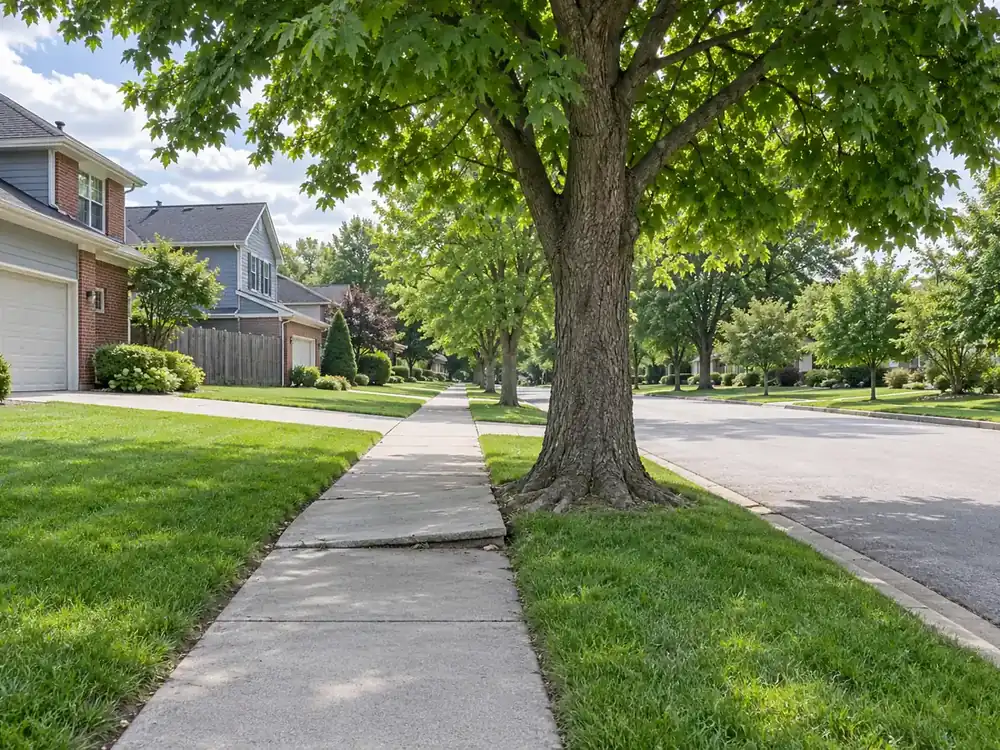
A tree between sidewalk and curb often falls under municipal management, with each town setting its own process. Tree removal on city property should begin with the responsible public department's direction. Report low limbs over the driveway entrance or a broken parkway branch without walking underneath it.
| Town | Official direction for a parkway tree |
|---|---|
| Aurora | The city owns and maintains parkway trees; report concerns through Customer Service. |
| Naperville | Parkway trees belong to the city and removal is limited to its Department of Public Works, according to its tree-removal page. |
| Elgin | The city maintains public trees, including the strip between sidewalk and curb; use the tree-trimming contact route for a city-tree concern. |
| Joliet | The city removes dead or dying parkway trees; its Forestry page directs residents to report them. |
| Batavia | Residents need a city permit for parkway-tree removal, with the form returned to Community Development, says Public Works. |
| Geneva | The Streets Division handles parkway-tree inspection, trimming and removal, as described on its Tree Management page. |
Fence Lines, Shared Trees and HOA Land
A fence alone doesn't settle ownership of a tree rooted beside it. For tree removal on a property line, ask a surveyor to clarify an uncertain boundary and a local attorney about disputed rights or consent. Your tree pro assesses the tree rather than deciding a boundary dispute.
Tree trimming over a property line also needs a defined scope. Describe which limbs extend across the fence and speak with the neighboring owner. Ask a local attorney how tree-cutting laws apply to neighbors when permission is disputed; don't assume that an overhang authorizes removal of the trunk.
An HOA may have a separate approval process for common land or landscaping. Ask the association manager which documents apply to the tree's location. The tree assessment and the permission discussion can move forward together, without delaying your initial call.
Wires and Damaged Branches
A downed or sagging wire is an electric-utility matter, so keep well away and treat it as live. Contact the utility serving the address or 911. If ComEd is your electric provider, follow its instruction to leave the area and report a downed line. A tree permit doesn't authorize handling electrical lines.
Keep people, pets and cars away from a leaning tree or a cracked or hanging limb. Photograph the setting only from a safe distance. You can discuss tree removal while your tree pro checks who can authorize the work; no permit paperwork has to be completed to make that call.